
A Guide to Concrete Construction 2020
Concrete remains a fundamental basis for the Australian Construction Industry. It provides a number of benefits: social, economic, and environmental – that means it is a sustainable material.
This edition of the Guide to Concrete Construction represents a major review of the volume. The contents were last reviewed in 2002 and much has changed in the composition and specification of concrete. The reader will notice changes in the structure and content of this volume to address these changes and ensure a contemporary description of concrete – its composition and performance.
The presentation of this edition has also changed to reflect modern communication where on-line resources are rapidly outstripping ‘hard-cover’ texts. In doing so, the revision of the content can be more readily achieve, allowing maintenance of the knowledge to reflect future changes that may be seen in codes and Standards – both Australian and International.
RESOURCE
Guide to Concrete Construction
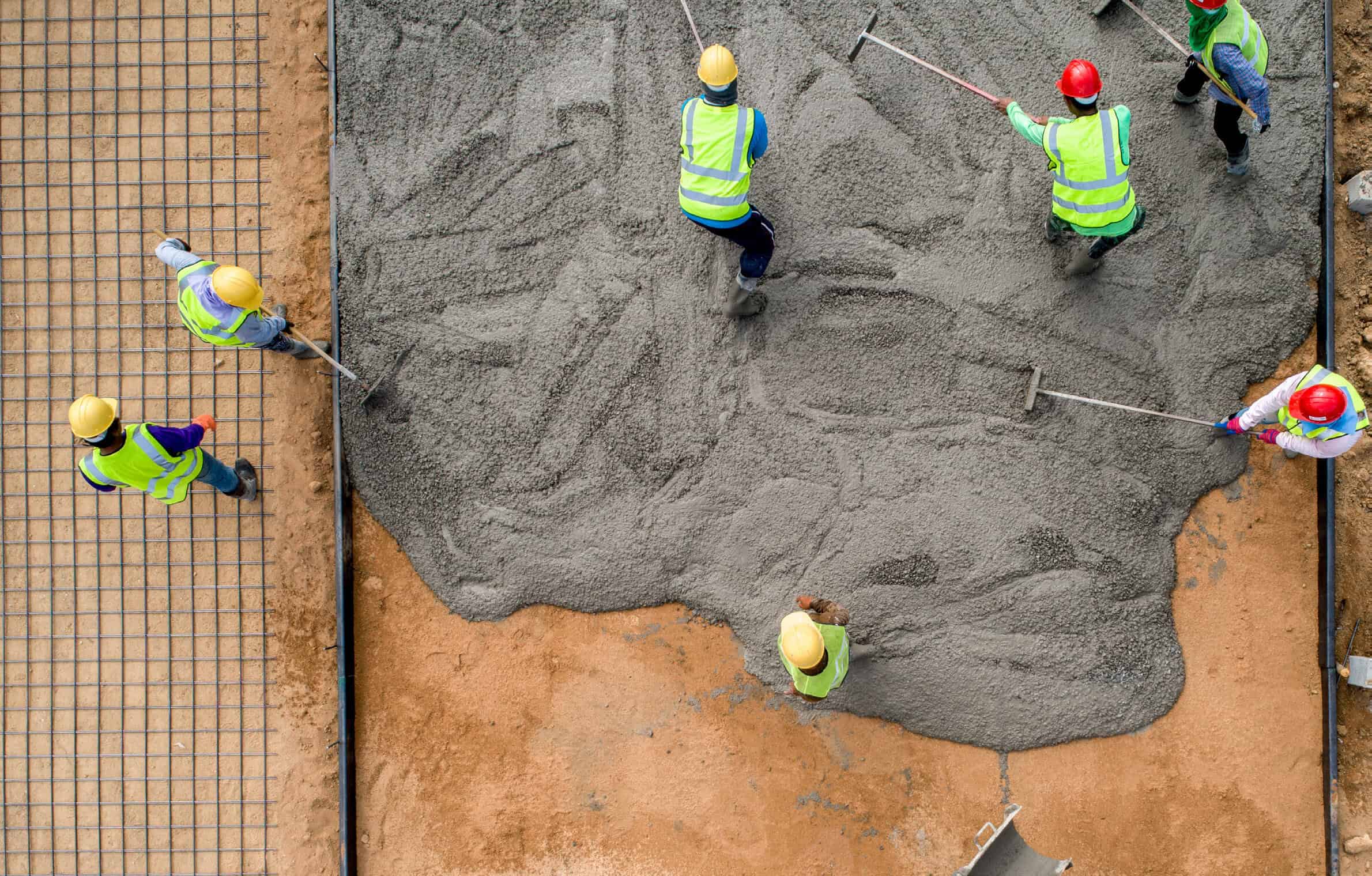
In it’s most basic form, concrete is a mixture of cement (‘Portland’ or blended), water, and fine and coarse aggregates (sand and crushed rock or natural gravel). Concrete is plastic when first mixed, but it then sets and hardens into a strong, solid mass
Download the Guide to Concrete Construction
View the Guide to Concrete Construction by Parts
GUIDE
Part I: Principles of Plain, Reinforced, Pre-Stressed and Fibre Reinforce Concrete
Concrete structures generally incorporate reinforced and/or prestressed members. Many concrete structures do require some form of reinforcement, most commonly steel bards or wires, in order to carry their design loads.
Part II: Constituents of Concrete
Part II of the Guide includes sections on: Cements; Supplementary Cementitious Materials; Aggregates; Water; Admixtures; Reinforcing and Prestressing Steel Properties; and Fibres for Concrete.
- Section 1 – Cements
- Section 2 – Supplementary Cementitious Materials
- Section 3 – Aggregates
- Section 4 – Water
- Section 5 – Admixtures
- Section 6 – Reinforcing and Prestressing Steel Properties
- Section 7 – Fibres for Concrete
Part III: Concrete Mix Design
The selection of concrete mix constituents and their proportions is commonly referred to as ‘Mix Design’.
The process of concrete mix design is outlined and various methods of carrying out mix design are highlighted.
Part IV: Specifications, Manufacture and Supply of Concrete
Part IV includes sections on: Specifying and Ordering Concrete; Manufacture of Concrete; and Supply of Concrete.
- Section 8 – Specifying & Ordering Concrete
- Section 9 – Manufacture of Concrete
- Section 10 – Supply of Concrete
Part V: Concrete Mix Design
Part V contains sections on: Steel Reinforcement; Fibre and Prestressing Steel Handling and Fixing; Handling and Placing; Compaction; Finishing Concrete Flatwork; Curing; Control of Surface Finishes; Control of Cracking; and Hot and Cold Weather Concreting.
Part VI: Special Applications
Part VI includes sections on: Slip-formed Concrete; Precast Concrete; Underwater-Tremie Concrete; and Super-Workable Concrete.
- Section 19 – Slip-formed Concrete
- Section 20 – Precast Concrete
- Section 21 – Underwater-Tremie Concrete
- Section 22 – Super-Workable Concrete
Part VII: Developmental Applications
Part VII includes sections on: Alternative Binders; and Concrete Technology for the Future.
- Section 23 – Alternative Binders
- Section 24 – Concrete Technology for the Future
Part VIII: Properties and Testing of Concrete
Part VIII includes sections on: Properties of Concrete; and Concrete Testing and Quality Assurance.
- Section 25 – Properties of Concrete
- Section 26 – Concrete Testing and Quality Assurance
Part IX: Related Site Practices
Part IX includes sections on: Formwork; and Occupational Health and Safety
- Section 27 – Formwork
- Section 28 – Occupational Health and Safety
Part X: Environmental Considerations
This section aims to discuss a range of matters related to ‘environment’ that affect, or are affected by, the cement and concrete industries. Whether it is form a technical or a community perspective, matters related to ‘environment’ are topical in both politics and society in general.
Part XI: Specification for Concrete Construction – Background and Development
This specification has been developed in good faith using current Standards and industry practice. There may be certain circumstances where alternative approaches are required.
Glossary
This document provides a list of over 300 technical terms popularly used in the field of cement, concrete and aggregate – accompanied by a brief definition for each of them. Interested readers may find it useful for a quick referencing in their everyday practice.